Monday, February 8, 2010

BREAKING: Saints-Colts Super Bowl was the most watched show in U.S. television history...

 
(Story © 2010 by the Associated Press; all photos © 2010, New Orleans Times-Picayune.)


Super Bowl is most watched
TV show ever
Monday, Feb 8, 2010, 4:27 PM (ET)
By DAVID BAUDER

** NEW YORK (AP) - The New Orleans Saints' victory over Indianapolis in the Super Bowl was watched by more than 106 million people, surpassing the 1983 finale of "M-A-S-H" to become the most-watched program in U.S. television history, the Nielsen Co. said Monday.

** Compelling story lines involving the city of New Orleans and its ongoing recovery from Hurricane Katrina and the attempt at a second Super Bowl ring for Indianapolis quarterback Peyton Manning propelled the viewership. Football ratings have been strong all season.

** "It was one of those magical moments that you don't often see in sports," said Sean McManus, president of CBS News and Sports.

** Nielsen estimated Monday that 106.5 million people watched Sunday's Super Bowl. The "M-A-S-H" record was 105.97 million.


** The viewership estimate obliterated the previous record viewership for a Super Bowl - last year's game between Arizona and Pittsburgh. That game was seen by 98.7 million people, Nielsen said.

** The "M-A-S-H" record has proven as durable and meaningful in television as Babe Ruth's record of 714 home runs was in baseball until topped by Hank Aaron. Ultimately, it may be hard to tell which program was really watched by more people.

** There's a margin for error in such numbers, and Nielsen's Monday estimate was preliminary, and could change with a more thorough look at data due Tuesday.


** "It's significant for all of the members of the broadcasting community," said Leslie Moonves, CBS Corp. CEO. "For anyone who wants to write that broadcasting is dead, 106 million people watched this program. You can't find that anywhere else."

** Moonves predicted CBS will earn more in advertising revenue than in any other Super Bowl. The good ratings for the game and football in general also set CBS and other football broadcasters up well when selling advertising for next season, he said.

** The Nielsen estimate also drew some congratulations from Alan Alda, the star of "M-A-S-H," and the slugger whose record was beaten.


** "If the 'M-A-S-H' audience was eclipsed, it was probably due in large part to the fact that the whole country is rooting for New Orleans to triumph in every way possible," Alda said. "I am, too, and I couldn't be happier for them. I love that city."

** There are more American homes with television sets now (114.9 million) than there were in 1983 (83.3 million). An estimated 77 percent of homes with TVs on were watching "M-A-S-H" in 1983, compared with the audience share of 68 for the Super Bowl.

** Nielsen also measures only the United States, and it's possible some World Cup soccer games were seen more worldwide. Accurate measurement of television audiences outside the United States is spotty at best.


** Alda also wondered whether the numbers were too close to declare a new champion. He thinks Nielsen didn't take into account large numbers of people watching "M-A-S-H" communally, which is often the case for football games, too.

** "Not to say I'm competitive, but in part we are talking about sports," he said. "And I actually AM competitive."

** McManus didn't want to jinx it, but the abnormally strong viewership for football this year left him hoping for a record. The NFC and AFC championship games both had their biggest audiences since the 1980s. The growth of high-definition television and its appeal to sports fans has also helped.


** A competitive game until the final minutes sealed it. McManus acknowledged some nervousness when Indianapolis jumped out to a 10-0 lead - a Super Bowl rout often makes people turn away from the game - but New Orleans roared back.

** The Mid-Atlantic blizzard also helped CBS. After New Orleans, the highest-rated market was snowbound Washington, Nielsen said. More people watched the game from their homes in that area instead of going to parties or bars, and Nielsen does a much better job counting viewers in homes than outside of them.

** "Bad weather in the Northeast and good weather in Florida was a good combination for us," McManus said.


** The Super Bowl also proved a strong launching pad for the new CBS series "Undercover Boss" that premiered after the game. An estimated 38.6 million people watched the first edition of a series about corporate honchos working secretly as low-level employees in their own companies, Nielsen said. That's third only to a 1996 "Friends" and 2001 "Survivor" as the most-watched program after the Super Bowl.

** Meanwhile, Dorito's was a big winner in a measurement of interest in the commercials played during the Super Bowl. TiVo Inc. said the snack company's ad featuring a boy telling a man to keep his hands off his chips and his mom was stopped and played back in 15 percent of homes with the digital video recorder.

** The secretly filmed CBS promo with David Letterman, Jay Leno and Oprah Winfrey came in second, followed by the Snicker's ad with Betty White and Abe Vigoda flattened in a football game.


** In general, however, TiVo found less interest in the commercials than it has in previous years, judged by how many people paused live action to see them, said Todd Juenger, general manager of TiVo's research department.


Friday, November 20, 2009

Why will "Ayn Rand and the World She Made" never go out of print?


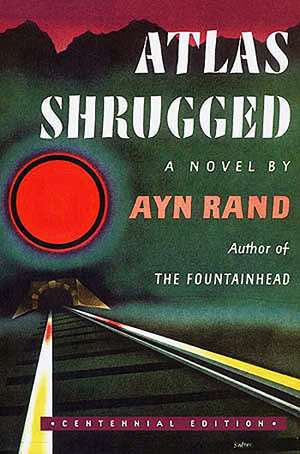
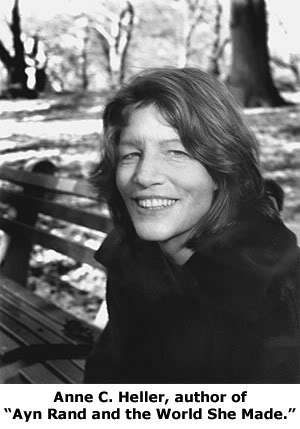
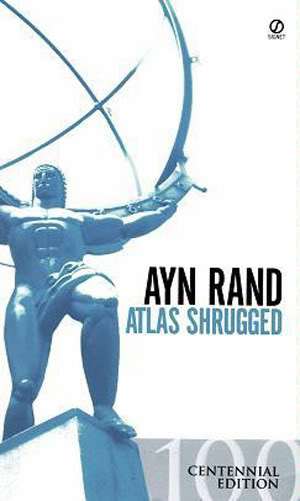
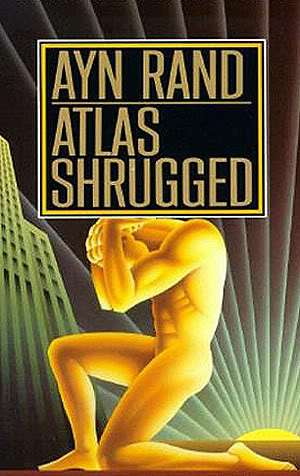
** On October, 27, 2009, publisher Nan A. Talese (an imprint of Random House) released Anne C. Heller's new book, "Ayn Rand and the World She Made" – about the life of Russian-American author Ayn Rand (1905-1982) – whose 1957 classic, "Atlas Shrugged" – seems eerily clairvoyant today.


** "Atlas Shrugged" is a doomsday novel of heroes, villains, love triangles and politics – set against a backdrop of an American economy in collapse, e.g., gifted innovators disappear, industries merge and close, millions of people are thrown out of work – while the federal government tries to help by subsidizing, bailing out and taking over whole industries – issuing "greater good" directives which pushes the United States closer to socialism.

** Sound familiar?

** So who was Ayn Rand and why is she still relevant today?


** You don't have to be an Ayn Rand follower to get into Anne C. Heller's spectacular new book. You can even be a "cafeteria-fan" like I am - picking and choosing parts of her ideas that are compatible with your own – while still getting tremendous enjoyment reading about what made Rand a larger-than-life figure in American philosophy and literature.


** In my view, what's most impressive – and what makes "Ayn Rand and the World She Made" feel like a book that will never go out of print – is author Heller's even-handed (and easy-to-read) summaries of Rand's complex ideologies about American individualism, capitalism and democracy, along with synopses of ALL of Rand's books and lectures – explained in ways that are sometimes more lucid than Rand's original works, making them more accessible to mainstream readers.


** Don't believe what others say. While it's obvious the author is NOT a Ayn Rand disciple - (which she tells readers up-front) – it's ALSO clear that she is NOT a comprehensive hater of Ayn Rand. Anne C. Heller's book reads like a journalistic strike down the middle of the plate, with no political agendas or axes to grind.


** Ayn Rand's published works are brilliantly controversial – but to many readers, they're also riddled with mind-numbingly dense passages that require a level of concentration so intense – that you feel like your head might explode. Heller tackles this problem by simplifying what's impenetrable – while opening a window onto what Rand was like - as a flesh-and-blood person. The author's work has a story-telling momentum that's unusual compared to other biographies – in that her obligatory chapters about Rand's childhood – aren't those that you'll want to "skip over."


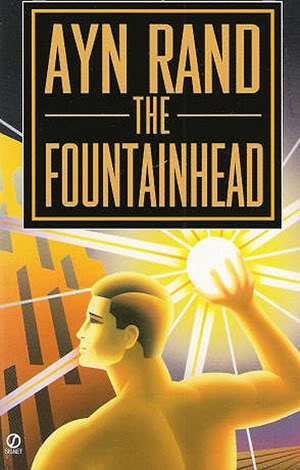
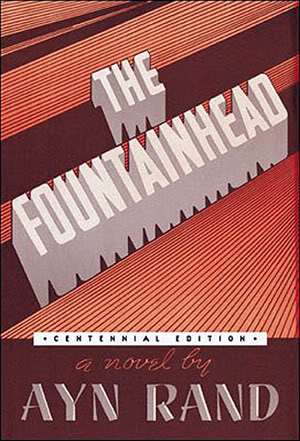
** With the help of researchers digging through archives in Russia and throughout the United States, Anne C. Heller brings Ayn Rand's childhood and adult years excitingly to life – making more clear to mainstream readers why Rand's experiences were critically important to understanding how her ideas against socialism and collectivism were formed – and how she refined them over time. The author further illustrates how Rand integrated these ideas into all of her novels, particularly "The Fountainhead" (1943) and "Atlas Shrugged" (1957) – and how she subsequently became world famous – while carrying a torch of stubborn dismissiveness toward her detractors, all the way to her death in 1982.


** "Ayn Rand and the World She Made" reads more credibly than all previous treatments of Rand's life to date – because author Heller approaches Rand as a critical admirer – and not as a blind-faith fan. Her ability to make Rand's ideas come alive demonstrates her admiration and respect of Rand's intellect. This "closed the sale" for me as a reader – and wipes out criticisms written by some of Rand's followers - who are obsessively parsing every word in Heller's book. Even Cliffs Notes versions of "Atlas Shrugged" and "The Fountainhead" are somewhat tainted by being written by authors possessing an over-eager zealotry of her ideas. Not once did I feel Heller was presenting Rand - as being anything more than a tremendously intelligent, charismatic and charming figure - who could also be frighteningly eccentric, petty and cruel.


** Most reviews have been favorable. But while reading a few negative reviews, I detected an undercurrent of resistance to Ms. Heller's work from people, 1) who believe themselves to be more intellectually gifted than Heller to discuss Rand's life and work (hence are perhaps too biased), 2) who are horrified that lurid and less-than-flattering material about Rand's life is included (despite being too compelling to be ignored), 3) who are upset that they weren't contacted for inclusion – or if they were included – that their testimonies weren't published in full, 4) who take issue with the lack of cooperation from the Ayn Rand Institute and Leonard Peikoff, Rand's "intellectual heir," or 5) who hate Rand so much that they feel any book about her should be treated with contempt.


** In my view, these complaints are a by-product of Rand's fans or haters who are dissatisfied with the content and approach of Heller's book. Had the author included comprehensive interviews from peripheral supporters and detractors – "Ayn Rand and the World She Made" would have exceeded the page counts of "Atlas Shrugged" and "The Fountainhead" combined. (Yet Heller's book is exhaustively researched, with 151-pages of notes and an index.) The author's positive summations of Rand's complex ideas – mixed with true tales which reflect poorly on her behavior and treatment of others – proves that Heller is neither a Rand follower nor a detractor. This obviously irks rabid fans and haters of Ayn Rand alike.


** The most important figures in Rand's inner circle are included in this book, e.g., those closest to Rand from the late 1930s to the late 1960s, arguably the most critical period of Ayn Rand's adult life. Hence as a reader, it's mildly bizarre to see people dismissing this book because it includes "ex-Rand-followers-who-left-the-fold," which infers their testimony carries no weight today. Nearly ALL the individuals interviewed by Heller – still express joy and sadness – while acknowledging their time with Ms. Rand was the most vigorously enriching and rewarding of their lives.


** Ayn Rand's key journal entries and letters have already been published worldwide and reside in several locations outside of the Ayn Rand Institute. Hence I don't believe there's much left waiting to be discovered that will be earth-shattering. Ms. Heller's success is consolidating Rand's ideas into a marvelously coherent single volume - and finding new, previously untapped sources to construct a more fully formed picture of Rand - that goes beyond what we already know.

** Leonard Peikoff's testimony from the Ayn Rand Institute, while useful had he agreed to cooperate - would have added little that's new – because he himself has already published numerous analyses about Rand's work. Peikoff's contributions to Rand's legacy HAVE been noted by Heller. But in fairness, Peikoff's testimony would have been only relevant, in my view, to those mainstream readers who would've wanted him to ADD to what Ms. Heller has already satisfactorily provided - about Ayn Rand's final months AFTER she stopped making public appearances - before eventually succumbing to cancer.


** In sum, this book is NOT aimed at Ayn Rand intellectuals, and this is NOT a criticism. (Though I believe they will still enjoy reading every page.) "Ayn Rand and the World She Made" feels aimed at mainstream readers seeking an unbiased view and an all-in-one-reference of Rand's ideas. I do NOT know Anne C. Heller personally, but I believe she has painted a superb image on an enormous canvas – of a controversial genius of titanic and electrifying importance – that will still feel relevant many years from now. If you doubt this, then why are people still talking about Ayn Rand today – nearly 30 years after her death – and more than 50 years after "Atlas Shrugged?"

(Original material © 2009 by David Kusumoto.)

Wednesday, November 4, 2009

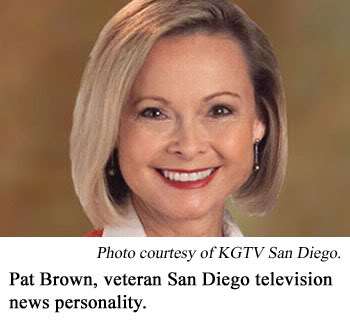
** BREAKING / EXCLUSIVE – Pat Brown Returns to San Diego Television News.


** "How's It Going to End?" has learned that four months after leaving KNSD (NBC) Channel 7/39 – long-time San Diego news and weather anchor Pat Brown – has a new weekend gig.

** She will join ABC-affiliate KGTV Channel 10 as a weather anchor beginning this Sunday, November 8, 2009, at 6pm and at 11pm. She will work Saturdays and Sundays through the end of January, 2010.

** Pat Brown declined to comment about her status other than to say she is "happy" to be returning to San Diego television.

** However, Joel Davis, news director for KGTV Channel 10 – confirmed that Ms. Brown will fill in for weathercaster Kerstin Lindquist, who is on maternity leave.


** “We’re thrilled that since KNSD (NBC Channel 7/39) has farmed out their weather duties to Los Angeles, that we have the opportunity to bring someone of Pat’s stature and popularity to the 10 News weather team," Davis said. "It reinforces our commitment to bring San Diegans important local weather information – with the best weathercasters and the most advanced technology.”

** This development means Pat Brown will have worked at all three major network affiliates – KFMB CBS Channel 8, KNSD NBC 7/39 and KGTV ABC Channel 10 – since the late 1980s. Sources say she'll spend her weekdays continuing to serve the community as a tour guide for DayTrippers, a San Diego-based travel firm.

** My original story, posted on July 27, 2009, appears below.

* * * * *
MONDAY, JULY 27, 2009
One Month Later -- What does Pat Brown's departure mean for local TV news?


** On Friday, June 26, 2009, Pat Brown gave her last weather report on NBC-owned KNSD 39 (Cable Channel 7) in San Diego.

** The pioneering host of the groundbreaking "P.M. Magazine" show on KFMB Channel 8 during the 1980s – Ms. Brown had a near continuous presence on the San Diego television news landscape. The former state pageant queen from Sheperdstown, West Virginia (1977), moved west – and effortlessly re-invented herself into a beauty-with-brains TV personality and news reporter – before settling into her last incarnation as a weather anchor armed with an effervescently sunny on-air disposition. In an industry never known for stability, Ms. Brown's admirers knew her to be just that – a consistently productive and positive force for San Diego television programming – and for the community she continues to serve.

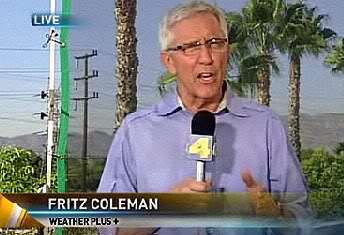
** The following Monday, Ms. Brown was replaced by Fritz Coleman, a nearly 30-year veteran of the TV wars from KNBC Channel 4 in Los Angeles, one of NBC's flagship-owned stations (alongside WNBC in New York).


** But that wasn't the headline to some of us. The headline was that the award-winning Mr. Coleman, by all accounts a "nice guy" with broad appeal – is now broadcasting his San Diego weather reports from Los Angeles – on a custom-built set back at KNBC.


** Though such "arrangements" aren't new – the move was the first of its kind involving a network-owned news station in San Diego. It illustrates the dire economic health of local television news – with KNSD NBC 39 (in my view) – probably faring the worst, budget wise, among its competitors. Station managers everywhere have been slashing budgets – first dumping behind-the-scenes staff and "superfluous programming" – while saving their biggest (and most visible) cuts for last.

** Pat Brown's departure wasn't your garden variety "revolving door" personnel change. It was emblematic of something worse that has cast a chill in the rooms and halls of KNSD NBC 39 – and beyond. Wishful-thinking station heads might be blocking out the precedent – and scoffing at satirically minded suggestions that any station that "jobs out" any portion of its local identity to a distant area code – is setting itself up to be wiped out entirely - by a thousand paper cuts afflicted over the next several years. Some TV insiders are quietly saying that "it could've been worse." Well, that's true. Maybe they should be thankful. They believe the tempest surrounding Ms. Brown's departure will "blow over." And likely it will. Fritz Coleman has already won over some skeptics – and I give credit to news director Greg Dawson for trying to manage the ill-smelling winds of anger still blowing after this change.

** But the bigger picture that's unique to KNSD NBC Channel 39 – has less to do with Pat Brown and more to do with the station itself being owned by NBC. Ms. Brown's departure raised eyebrows, for sure. But what was more ideologically significant to journalists – was that her departure and subsequent replacement by talent based in Los Angeles - was the first blatant evidence of what's been going on for a long time at network-owned stations in markets smaller than San Diego, e.g., the creeping decentralization of news and weather information – led by network executives who work in distant offices. Thus we have a classic instance whereby it's not always good to be OWNED by a network – and why it's sometimes better to be a network affiliate operating with greater independence.


** Since about 2002, TV news stations have been trending toward hiring more versatile reporters and anchors. These so-called "video-journalists" carry their own cameras and edit their own news segments – and sometimes get the privilege to present them live on the anchor desks where their higher-paid colleagues sit. Everyone knows that every "hybrid journalist" invited to the anchor desk to present his or her story – is being "screen tested." Such "hybrids" save big-time dollars for station managers – and equally significant, they can serve as "leverage" when the contracts of highly paid news anchors come up for renewal.

** On the surface, it appears to some that Pat Brown's "Achilles heel" was not being "versatile" enough. If so, you can count on other anchors at NBC 7/39 to be reviewed similarly for "fitness and compatibility" with the network's finance department. Hence the oft-heard advice during the last few years remains sound, e.g., "if you're still in TV news – the faster you can jump on the "hybrid train" the better – thus avoiding obsolescence and/or getting dragged or tossed behind.

** Local news anchors draw salaries that are double, triple or even higher than those working behind the scenes. An anchor's "work" is to bring in ratings. So what's that got to do with Pat Brown? Nothing unless you think she was a drag on ratings. I personally don't. It was all about saving money – but in a way more pernicious because the station is owned by a network - that decreed that news about the weather – does NOT require a local person to deliver it, hence can be pared less painfully than other departments.

** Everyone working in television news sees the handwriting on the wall. But in the past, even when times were good - that handwriting was mostly about being dumped in a budget cut and being replaced by someone cheaper, usually someone younger from a smaller market.

** But at a network-OWNED station – you have the additional fear of watching departments consolidated or phased out in stages, replaced by talent or crews located hundreds of miles away at other stations bigger than your own. It's analogous to newspapers shedding staff while publishing articles by news syndicates or wire services that are written in other states.

** What's unfortunate is despite the acknowledged downturn in local TV news nationwide - (because web-based news keeps siphoning viewers away) – the band-aid patches applied by network-owned-and-operated "suits" can't stop the bleeding. And watering down a station's local news product – under the aegis of saving money during a recession – also risks washing away the higher purpose of targeting audiences and advertisers in a region that will drift further away from KNSD NBC Channel 39 – and toward competing stations that remain committed to San Diego.

** It bears repeating that San Diego is the ninth largest city in the U.S. Yet corporate America and NBC keeps treating San Diego as if it's geographically, demographically and politically identical to Los Angeles. I sense that Mr. Dawson knows this to be true, even if he can't say it. Corporate America has always acted as if San Diego is a suburb of Los Angeles – and even believe its WEATHER is the same – despite San Diego's location on a harbor and Los Angeles's location on a smoggy basin.

** NOTE: Philadelphia is about the same distance to New York (and yet so different in character) - as San Diego is to Los Angeles. But NBC knows that replacing Philly-based weather anchors at WCAU NBC Channel 10 - with their counterparts at WNBC 4 in New York - would be greeted with outrage. Yet network executives continue to have a "blind spot" about San Diego - seeing it as being the same as L.A. - despite the polarizing political and cultural differences that are obvious to viewers in both cities.

** Pat Brown will re-invent herself like she always has – and will turn up soon because of her strong ties to the community. But in my view, intra-state or interstate consolidations – involving network-owned news stations like KNSD Channel 39 in San Diego – are incompatible with efforts to maintain revenues from local advertisers. Magnify that when you consider NBC's prime-time lineup is weak on every evening except Thursday – and that its sports product is limited to golf, NFL Sunday Night Football and the Olympics.

** The final irony amid all these words is this. A visit to KNSD NBC 7/39's website on Monday, July 27, 2009 at 9:45 p.m. Pacific Time – yielded the following banner slogan:


* * * * * *
(Original material © 2009 by David Kusumoto.)

Tuesday, November 3, 2009

Why is the WSJ the #1 Newspaper in America? (It's not because of its politics.)


** On October 26, 2009, the Wall Street Journal (WSJ) finally reached the top of the newspaper world.

** As expected, the Audit Bureau of Circulations (ABC), announced that the WSJ is now the highest circulation daily newspaper in the United States with 2,024,269 readers. Of America's top 25 papers, the WSJ is the only publication that is gaining readers. The other 24 papers continue to drop circulation at alarming rates. You can read the results by clicking here. (My own hometown paper, the San Diego Union-Tribune, dropped 18,548 readers since the ABC's April 27, 2009 survey, but climbed up one spot to #24 out of 25 dailies.)

** If you're reading these words now, you are responsible for the death of your local daily newspaper. Every minute you spend on the web – is a minute you've taken away from reading a newspaper or magazine. Millions have done the same. You've fled to the web to get news and information more quickly. Advertisers have likewise fled, tanking revenues at many news organizations, leading to scores of layoffs and consolidations. The reasons for the slow death of newspapers have been well documented.

** But the bigger question is this: "Why is the Wall Street Journal an exception?" Why is it defying gravity? Why is the Journal's popularity climbing?

** If you're reading this – and you DO NOT read the Wall Street Journal – what image pops into your head?

** Here's what the WSJ looked like almost 10 years ago:


** Here's what the WSJ looks like today:


** Alan Murray, Deputy Managing Editor of the Wall Street Journal – and executive editor of the Wall Street Journal Online – declined to comment, react or to speculate about the constellation of reasons responsible for the Journal's success – and what role, if any, does Rupert Murdoch play. (Murdoch's News Corporation took ownership of the WSJ after a shareholder vote in December 2007.)

** Thus I'm going it alone.

** Some political partisans want you to believe that the WSJ's conservative political positions are responsible for its success.

** I say baloney.

** Some political partisans also want you to believe that Rupert Murdoch, a known political conservative who owns the WSJ through his News Corporation – is becoming financially enriched because of his positions against the Democratic Party and President Barack Obama.

** Again, I say baloney.

** Meanwhile, some political partisans believe that only money-grubbing fat-cats – who are in love with Republicans – read the WSJ. Some of these same partisans say Murdoch is a fascist pig who runs a fascist paper. (Honest, this is how a few left-wing pals of mine view the WSJ. One even told me publicly on Facebook that "decent people don't read fascist rags" like the WSJ.)

** Again, I say baloney.


** My response is this: My life is filled with much more important things to worry about – than to think about Rupert Murdoch. I don't have an opinion about him one way or another. I do believe, however, that if Murdoch is becoming financially enriched from the WSJ – it's NOT because of any antipathy toward Democrats or President Obama. I say this because most people DON'T read the editorial pages of any paper, let alone the WSJ's.

** In my view, the WSJ is now the nation's largest circulation daily for one reason, and it has less to do with Murdoch and more to do with what the WSJ has become since 2000. And that's an entertaining paper that's no longer just covering financial news.


** Anyone who has a job – or doesn't have a job – from CEOs down to the lowest rung of a company's ladder -- has discovered, especially during this recession, that the WSJ's "no-polemics" rule while covering breaking news or business trends – to be much more valuable than whatever is published on its editorial pages.

** Career Journal, which features job tips every week, Walt Mossberg's columns about computers and software, Sue Shellenbarger's Home and Family Mailbox – and the WSJ's Weekend Journal – the latter featuring arts, entertainment and sports news laid out in rich color – have become the most popular features in the Journal's recent history.


** Among the writers on the WSJ's editorial pages – only one conservative is considered widely read – and that's Peggy Noonan, who came out against GOP vice-presidential candidate Sarah Palin in 2008. In fact, it is the WSJ's "guest editorial writers" – and NOT editorials written by the Journal's own staff – who have caused more indigestion with political partisans.

** Conversely, the New York Times has dropped 150,000 PAID readers since March 2008 – and its better-known anti-Republican columnists who are still on the Times payroll include Frank Rich, Paul Krugman and the always enjoyable (to me) Maureen Dowd. Over the same period, the WSJ GAINED circulation. Why?

** The Democratic Party presently holds the greatest power and influence in all branches of the United States government since 1964. Barack Obama is only the 3rd Democrat to capture the White House over that period – and he's the first Democrat since 1976 to earn a majority vote. So why are the New York Times and the Los Angeles Times – two papers which cater to liberal Democrats – failing?


** The answers to both questions are NOT related to politics. In my view, partisan politics isn't a significant factor. The destruction of metropolitan dailies in the United States are a reflection of what's happening everywhere in publishing. Advertisers and readers have fled to the Internet, because that’s where readers are getting content.

** Pick any one of the 25 papers listed in the latest ABC Circulation report – and I'll wager that NOT one has lost readers because of its editorials. Twenty-four of those 25 are simply not providing content that's "perceived" to be as timely, as useful or as relevant to readers – compared to their online counterparts. Meanwhile, the WSJ – while not a "hometown" paper – is perceived to be instantly providing everything – without giving away everything for free. People are actually PAYING to access the Journal's content (more on that in a minute).


** Most Wall Street Journal readers, myself included, don't always care about what's on its editorial pages. We're sticking with it because since about 2000, the WSJ has embraced a more inclusive view of daily content. Financial news, once the signature bread and butter of the WSJ – that filled page after page of stock quotes and other facts and figures printed in mouse type – has given way to news about large and small businesses, careers, computers, fashion, movies, arts, television – the whole nine yards.

** Competing papers offer the same, but the Journal hammers people with news people can use now, instantly – from finding the right job, navigating office politics, buying the best car, selecting the best wardrobe and patronizing the best hotels, restaurants and stores. Gone forever is the WSJ's image as a stuffy, 19th-century-looking, black-and-white broadsheet with ridiculously narrow columns and stories set in tiny type.


** More significantly, I believe the Wall Street Journal continues to "lead the way" with the most important news of the day, setting the news agendas of some of its competitors. It was the first paper to break the sub-prime mortgage and other financial scandals during the last 3 years, causing a "piggy-back" effect with competing editors in print and television. It's a rare day, for example, when a tabloid story about a balloon hoax – or a faux pas committed by a celebrity – will find its way onto the WSJ's front pages.

** So while the aforementioned represents the biggest reasons – in my view – for its success – the more spectacular phenomenon associated with the WSJ is this:

** At a time when almost everything online is FREE, the circulation for the ONLINE-ONLY version of the WSJ is through the roof
– with more than 360,000 PAID subscribers – which beats everyone else in this category by a country mile. Major "day of publication" stories are free – but the WSJ charges people for its content. Why are people reaching into their pockets to pay for content that other news organizations are giving away for free? I believe the answer is that they view WSJ-content differently from what's found in other papers.

** In sum, during this most trying of economic times
– in my view, subscribers believe the WSJ's stories are more relevant and more immediate to their personal and professional lives – and thus worth paying for.

** It's not about politics.


(Original material © 2009 by David Kusumoto.)

Tuesday, September 29, 2009

Why Not a National Day of Rest for Cell Phones?


** When was the moment you realized your cell phone had become permanently attached to your body? Seriously.

** I've been thinking about this for several years, most recently after leaving my house for what seemed like the 50th time in five years without my cell phone. You know the drill. Five minutes after you pull out your driveway (or maybe longer) - you realize you don't have it. You spend 20 seconds worrying about whether it's as important as your purse or wallet - before you ultimately cave in - making that dreaded U-turn back to your home.


** We all know the safety reasons associated with having a cell phone within reach -- but at what point did it become a stand-in for your very existence? I don't mean "I think, therefore, I am." I mean, when did it become, "I have a cell phone, therefore I am?" When did the cellphone become freighted with such titanic meaning?

** Our love-hate relationship with wireless phones turns mostly into hate when we see the lengths people will go - to make bogus excuses to be "unavailable" - despite the fact that wireless technology has made us more reachable than at any other time in history. Turned another way, friendships have gone bad when we feel accountable to respond to every cotton-picking voice mail and inane text message that's left on our phones. (I'm dating myself, but I remember getting my first land-line phone installed in my teenage bedroom, complete with its own seven-digit number. It was a thrill. But I wasn't tied to it like a ball-and-chain. Its cord was short and I couldn't carry it into another room.)


** Conversely, our cell phones have indeed become a metaphorical ball-and-chain, leaving us with fewer excuses to be "unreachable." You tell your friends, "I'm going on vacation and I'm not bringing my cell phone, so I won't be reachable, bla-bla-bla." Trust me, they don't believe you. They further don't believe you - (even when you're telling the truth) - when you say after-the-fact, "oh, I didn't get your message, I must have run into some bad reception."

** You Verizon customers know what I'm talking about. Your company's marketing mantra is, "can you hear me now?" So if your friends know your carrier is Verizon, expect to see a raised brow (or a rolling of the eyes) if you tell them, "gee, some places in my house have bad reception, with walls made of lead where no signals (or man) can reach." Huh-huh.


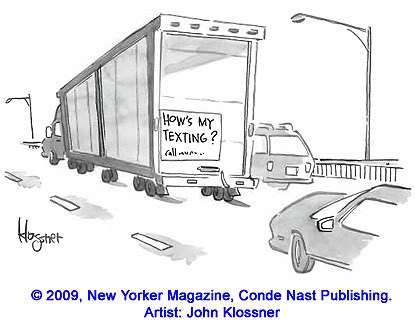
** And then there's texting, which is quickly replacing e-mail. You text when: 1) you can't reach a person on the phone, 2) you don't want to bother a person with a call, 3) you DON'T want to talk to a person "live" to avoid the long give-and-take that can eat up a lot of time. Texting comes in handy, but in my view, it has single-handedly replaced whole conversations - and dumbed down the literacy level of the world.

** Texting means purposely using abbreviations and misspelled words that have become a second language. In some cases, you need another book to decode them. For example, I'm not bothered when pals use the acronym "LOL" in messages that THEY send to ME. That's an easy one to figure out. Still, the day I use the term, "LOL" in any of my OWN communiqués - will be the day you are welcome to grab a pair of pliers and pry off one of my fingernails. [Strangely though, acronyms such as "LFMAO" (laughing my a** off) or "ROTFL" ("rolling on the floor laughing") seem OK because the imagery is so vivid.] But when was the last time you found yourself "rolling on the floor laughing?" Seems pretty rare to me.


** Which leads me to ask, have you EVER gone a whole day without your cell phone to avoid being reached? I'm not asking if you've ever turned your cell phone OFF for an entire day. I'm asking if you've ever PURPOSELY left your cell phone behind, out of reach, at home, at the office, wherever. How did you feel? Liberated? Or did you get all sweaty, worried about missed calls and messages? Did you shrug and say to yourself, "well, if people REALLY NEED to get a hold of me in an emergency - they'll find a way."

** Folks, I call that last one "the passive-aggressive method of being unreachable," e.g., putting the burden of being found onto your boss, friends and family. But it's a moot point because again, nobody believes you when you say you're unreachable. Or here's an excuse people don't believe (unless you're over 90): "I don't own a cell phone." Translation: Some people can get still reach me, just not you.

** I confess I've never ditched my phone on purpose because I'm always worried about getting into an accident - or not being able to get my car started in the middle of a dangerous neighborhood...at night...alone.


** Hence we come to the proposal for a "national day of rest" for cell phones. Ironically, this would have to be spread virally first over millions of cell phones -- to get more people involved. So far, it's not gaining much traction. Why not? Make it happen on a weekend when more people are at home. With all the "green talk" that's become so fashionable these days, someone at Greenpeace or at the NRDC should come up with a list of scientific reasons to endorse a cellphone-free day that would have a positive - however negligble - impact on Planet Earth.

** Of course we'd have to make a few exemptions for true emergencies. But otherwise, what would be so bad about having a national "sleep day" for wireless phones? Make it a national holiday to free ourselves from the yoke of responsibility that comes with our cell phones. Going through a whole day without hearing someone else's obnoxiously loud and silly ring-tones would be wonderful. (BTW, why is it always somebody else's ring tones that sound narcissistically stupid - while your own ring tones sparkle with originality?) Speaking for me, myself - I prefer a ring-tone that sounds like a real phone - and not a jukebox spitting out the first four bars of an atrocious melody.

** Please, let's get on this right away. Until then, I leave you with a video that displays a pipe dream. It's a 2009 Corona Beer TV commercial. It's a pipe dream because I don't know anyone on earth who's had the courage - (or more dollars than sense) - to do what you see in the 30-second spot below.


(Original material © 2009 by David Kusumoto.)

Sunday, September 27, 2009

Men vs. Women -- and Their Material Things


** Bringing back an "oldie" – just because it was a hit before. (The real reason is it will give me more time to outline and finish my next news post.) Until then...

** I don't usually comment on the quality of television commercials, but ten months have gone by and I'm still laughing. The Heineken spot below is fantastic, because it illustrates in a dynamic and humorous way -- the different values men and women place on material things. The commercial is entirely in Dutch (except for the end logo) and has aired unaltered on American television -- and is often seen on ESPN and during sporting events.

** Since its original debut in late 2008, its viral version on You Tube has been viewed nearly 3 million times. It has spawned two "sequels" by Heineken itself -- as well as a number of "knock-offs."

** A simple English translation of what the woman in the black dress says to her girlfriends touring her new home is: "Now this is the living room....and over here is the bedroom....(pause)...with...."

And everyone starts screaming.

** Does it make people buy more beer? I can't say because I'm biased. I've been in love with the Heineken brand since our first visit to Amsterdam many years ago. But in my view, this is already one of the funniest beer commercials of all time. (To be fair, if this commercial was "flipped," it could show men's unending fascination with gadgets and power tools.)


(Original material © 2009 by David Kusumoto.)

Thursday, September 10, 2009

Why are some dog-loving atheists choking up over a two-minute cartoon?


** On August 4, 2009, Wendy Francisco, a 54-year-old artist-musician-animal breeder from Del Mar, California (north of San Diego) – who now lives "somewhere in the mountains of Colorado" – uploaded a 1 minute, 58 second music video on You Tube.

** Her lyrics are so simple that a child can understand them. That makes sense. Mrs. Francisco is an editor of children's books.

** Her melody is so simple that it seems mined from an old nursery tune pulled from the public domain. It's not. It's original. Mrs. Francisco learned guitar at age 8, had a record deal by age 24 and has toured the country "and beyond," giving concerts for decades.

** Her hand-drawn images are so simple that they seem almost primitive. But Mrs. Francisco has been a self-taught artist since she was a child. In sum, she's not a novice.


** But what's NOT so simple - is explaining the explosion of emotions that have poured forth from hundreds of thousands of people who have seen "GoD and DoG" since its debut on August 4.

** I know what some of you are thinking. Being a secular sort of fellow, I thought the same thing. I told myself, "I'm not going to watch some sappy tribute about dogs and religion." A pal forwarded it to me by e-mail and I dismissed it. I don't even own a dog, even though my love for canines is well known. If you've ever owned a dog (or still own one), you know what I mean. They ARE family.

** Then another friend forwarded the video. Full disclosure: I dislike some (not all) "pay it forward" inspirational notes, because some feel like canned chain letters sent by people who let greeting cards carry messages - that they themselves – cannot articulate. Sincerity doesn't require perfect sentences or phrasing inspired by great poets. All that's required in my book – are words from the heart, fractured, imperfect, incomplete but real. Nevertheless, I clicked on the video.

** In less than two minutes, using a child's grasp of melody, lyrics and imagesWendy Francisco builds a case about the relationship between a higher being – and the co-existence of dogs and man. She doesn't cite scripture, she makes no references to Christianity – and she avoids conventional, confrontational and controversial dogma.


** In otherwords, Wendy Francisco delivers a message with such deceptive simplicity that it appears purposely designed to avoid trouble. She sings softly with an acoustic guitar, amid a montage of scribbled images and stock fonts which push her lyrics forward. She wrote, recorded and animated everything in about three days. She says her work was inspired by her dog, "Caspian." (See picture above.) This snow-white creature is described as being "3/4 Great Pyrenees and 1/4 Anatolian Shepherd Cross." Dog breeders will know what that means. I don't, but it doesn't matter. Nor apparently do you have to believe in a deity - to still be moved – by what Mrs. Francisco has to say.

** If you want to watch this video with with a higher quality image, click here. Otherwise, click below.


** "Religion masks the character of God," Francisco says on her website. Perhaps she means this: the ceremonial trappings of organized religion have stripped away the power and emotion associated with being in the presence of a higher being and of all living things. Mrs. Francisco admits she "struggles with modern day religion" because it "limits most people...women in particular."

** Ironically, I think it's the "religion" part that may stall the "mainstream media" from writing lengthy stories about Wendy Francisco, at least not until her view count at You Tube goes over 2 million hits. And I predict it will within the next two months. (As I write this, it's sitting around 860,000 views). While the evangelical press has fully embraced this work (no surprise), I found only two glancing references thus far in news stories on the Web (one in the St. Louis Post-Dispatch and the other in Atlanta for the Examiner group of newspapers).


** In my view, Mrs. Francisco has smartly taken a path of least resistance to get her message across. Mucking her work up with provocative language and complicated dogma would have stunted the video's reach beyond the church choir. Take away just ONE of the four elements in her music video: her lyrics, her melody, her calm singing voice or her hand-drawn images – and the power of her work goes from extraordinary to ordinary. Her message is NOT the analytical think piece you're reading now. Just read the comments that have been left behind. Many viewers say they cried or were deeply moved. Believers have expressed their thanks. And I believe many non-believers will acknowledge the video's emotional power, even if their views remain unchanged.

** While the video is unlikely to convert atheists – it does capture their deep appreciation for dogs. I will go further and say it may cause many dog-loving atheists to yearn to believe, that is, to want to believe – (even if it's no more than wishful thinking as from a child) – that a higher being "of some sort" is indeed responsible for putting dogs on Earth – for the express purpose of meeting man's instinctual need for companionship.


** But this is all mushy stuff. This is NOT the language of atheists. Atheists tend to be educated. I don't even have to look it up. They just are. Religion may have once worked at some level, perhaps at an early age. Or maybe it never worked at all. But the video is tantalizing because it conveys an abstract meaning (feelings) – and an appreciation of something beyond the reach of words.

** Most educated people, myself included, get visibly uncomfortable about things that can't be broken down into parts that can be objectively analyzed. "An 'A' equals an 'A' and that's that," we say. So why then, do our tear ducts squeeze a little while we're watching this video? What's that all about? If I knew the answer, I wouldn't be writing this.


(Original material © 2009 by David Kusumoto.)

Saturday, September 5, 2009

Artistic Genius Doesn't Equal Brains -- How Did Annie Leibovitz Get Stupid?


** UPDATE: September 11, 2009 - Annie Leibovitz has won a temporary reprieve. Ula Ilnytzky of the Associated Press posted the following this afternoon: "Annie Leibovitz has won an extension on a $24 million loan in a financial dispute that threatened her rights to her famous images, the two sides said in a joint statement. Leibovitz and the company, Art Capital Group, said the 59-year-old photographer had been given more time to repay the loan. The loan's deadline passed on Tuesday, but both parties had continued to work to try to resolve the dispute. Neither party would specify the length of the extension."

* * * *

** It's astounding coming across the number of artistic or athletic superstars worth millions – who can't handle their own money – or pick the right people to protect it.

** Joining the list is famed photographer Annie Leibovitz. The combined worth of her spectacular art portfolio -- AND her real estate holdings -- is about $80 million. And she's about to lose most of it very soon.

** Stating the obvious: the idea of any artist losing the copyrights to their life's work – is not only astonishing – but too often feels like the culmination of a series of bone-headed, self-inflicted wounds.

** Worse, many observers, including struggling artists who've worshipped her for decades – will find it very difficult - after reading the accounts below, to sympathize with her fate - (not that she's looking for it).

** Of all the news stories and opinion pieces about Leibovitz's troubles during the past month, in my view, the two best were written by Allen Salkin of the New York Times -- and by fellow-blogger David Eubank.

** "She partied too much and developed a pattern of financial mismanagement," wrote Eubank back on August 3, 2009. "Just because a person is an artistic genius, does not make them good with money or debt management. Leibovitz’s ability to make money through her work - offset her inability to manage her money and debt - until now."

** In fairness, Salkin of the New York Times said of Leibovitz back on July 31, "A recent series of personal issues has made navigating her already complex life more difficult, close associates said. In the last five years, Ms. Leibovitz lost her father, her mother and her companion, Susan Sontag; added two children to her family and oversaw the costly and controversial renovation of three properties in Greenwich Village."

** Salkin also wrote that Leibovitz's own friends told him that despite her success, she "has been shadowed by a long history of less than careful financial dealings." Even Vanity Fair editor Graydon Carter remarked, "The mind that can take these extraordinary pictures is not necessarily the same mind that is a perfect money manager."


** Meanwhile, the story below was published Saturday, September 5, 2009. It was written by Ula Ilnytzky of the Associated Press.

- - - - - - - - - -
Debts closing in on photographer Annie Leibovitz

     NEW YORK (AP) - Annie Leibovitz's artsy, provocative portraits of celebrities
regularly grace the covers of Vanity Fair and Vogue, images that have made her as famous as her subjects and earned her millions.
     Now Leibovitz risks losing the copyright to the images - and her entire life's work - if she doesn't pay back a $24 million loan by Tuesday.
     Art Capital Group (ACG), a New York company that issues short-term loans against fine and decorative arts and real estate, sued her in late July for breach of contract.
     "We have clear contractual rights and will protect them in any scenario," said ACG spokesman Montieth Illingworth on Friday. "Our preference is for this to be resolved."
     Some experts say filing for bankruptcy reorganization could be the best option for Leibovitz, 59, who has put up as collateral her three historic Greenwich Village townhouses, an upstate property and work.
     She bought two of the townhouses in 2002, embarking on extensive renovations to combine them into one property. That spurred protests from historic preservationists and a $15 million lawsuit by a neighbor.
     "Based on the magnitude of her obligations and the facts as they are publicly known, (bankruptcy) would be the best option," said art lawyer Peter Stern.


     Leibovitz's images of musicians, presidents and Hollywood glitterati are cultural touchstones. One of her earliest photos is of John Lennon curled up naked in a fetal position with Yoko Ono, taken just hours before he was assassinated in 1980.
     So to many, her decision to gamble the rights to her work seems inexplicable. "Jaw-dropping," Stern said.
     Her editorial agent, Contact Press Images, has declined to comment on the case, saying it is a private matter.
     Her spokesman, Matthew Hiltzik, has accused ACG of harassment.  "There has been tension and dispute since the beginning...For now, her attention remains on her photography and on continuing to organize her finances," Hiltzik said.
     A reorganization filing would suspend all litigation against Leibovitz and place her finances under the protection of a federal judge, said bankruptcy lawyer Paul Silverman, who works with Stern. Neither attorney is involved in the case.


     Last year, Leibovitz put up her homes and the copyright to every picture she has ever taken - or will take - as collateral to secure the loan to pay off her mounting debt: unpaid bills, mortgage payments and tax liens, ACG said.
     While no one has suggested publicly how Leibovitz got into such desperate financial straits, the mortgage debt on all her properties - including the townhouses in Greenwich Village and a sprawling estate in Rhinebeck, N.Y. - totaled about $15 million.
     This includes the $1.2 million loan she took out on two of the townhouses, and another $2.2 million three years later, according to New York magazine.
     In addition to her mortgages, court records show that she piled up years of federal, state and city liens and judgments from vendors for unpaid bills - all presumably now satisfied with the $24 million she borrowed.
     Federal records show that Leibovitz owed a total of $2.1 million in unpaid taxes for tax years 2004, 2006 and 2007. She also had New York state tax liens of $247,980 for six years, including $135,915 in 2007.
     In 2008, a design firm that did work on one of her Greenwich Village properties claimed that she owed it $51,000.
     Leibovitz was also accused that year of refusing to pay $386,000 to a photo stylist during a 2007 shoot Leibovitz did for the Disney Company in 2007.

     Her spokesman, Hiltzik, declined Thursday to discuss her finances.  "Annie is working to resolve the situation so it would be inappropriate to comment," Hiltzik said.
     Art Capital Group, which consolidated all her loans in September 2008, charged in its lawsuit that Leibovitz breached the contract by refusing to allow real estate experts into her homes to appraise their value and by blocking ACG from selling her photographs.
     ACG has estimated the value of the Leibovitz portfolio at $40 million; (separately), real estate brokers say her New York properties are worth about (another) $40 million.
     Leibovitz also owned an apartment in Paris, which she bought for her longtime companion, writer and feminist Susan Sontag.
     ACG, with art gallery-like offices on Madison Avenue, is in effect a high-end pawn shop. And just like pawn shops, is would be just as happy to see a default, according to art and money experts. Under the sales agreement with Leibovitz, Illingworth said, the company would get 10 percent commission on the sale of Leibovitz' real estate - and 15 percent on the sale of her portfolio.
     Leibovitz would get the rest after paying off the $24 million loan, interest and other fees, he said. If she defaults, the company would get a net 12 percent commission, after paying approximately 13 percent for costs and fees.

     Leibovitz, 6 feet tall with long blond tresses, joined Vanity Fair in 1983.  Over the years, her lens has captured the rich and famous: Barack Obama, Queen Elizabeth II and Bruce Springsteen among them. She gave the world its first glimpse of baby Suri, newborn daughter of Hollywood's superstar couple Tom Cruise and Katie Holmes, on the cover of Vanity Fair.
     Her Vanity Fair salary has been reported to be about $2 million, according to New York magazine.  She also has done work for Louis Vuitton and American Express; she charges $100,000 for private portraits.
     A meticulous and demanding artist designated a "Living Legend" by the Library of Congress, Leibovitz makes her photo shoots lavish, sometimes theatrical affairs.  For a portrait of Kristin Dunst as Marie Antoinette, she flew the actress and a crew to Paris for a shoot at the Versailles.  She put Whoopi Goldberg in a bathtub of warm milk.  Many of her images are provocative and controversial, including those last year of 15-year-old Miley Cyrus exposing bare shoulders and back, and a portrait of a very pregnant and nude Demi Moore in 1991. Leibovitz gave birth at the age of 51 to her daughter Sara in 2001, and has twins, who were born to a surrogate in 2005.
     Her financial problems escalated in 2003, during the renovation of her Greenwich Village townhouses. A neighbor sued her for $15 million after a common wall between their buildings was damaged. Leibovitz eventually settled by buying the neighbor's property for $1.9 million.
     Silverman, a past president of the New York State Bar Association bankruptcy committee, is not familiar with Leibovitz's case.  But he said a bankruptcy reorganization filing would give her control of what assets need to be sold and which to keep.  "It would allow her to decide the manner and method of the disposition," he said.
- - - - - - - - - -


** The New York Times's account of Leibovitz's troubles on July 31, 2009, can be read by clicking here. David Eubank's analysis of the same on August 3, 2009 can be read by clicking here.

(Original material © 2009 by David Kusumoto.)

Tuesday, September 1, 2009

Why are millions so easily duped? Michael Jackson "alive" video hoax exposed.


** I admit that I'm probably one of the few people who – while recognizing Michael Jackson's talent and global impact – is tired of reading about him. Thus I kind of chuckled when I found out about a fake video that surfaced last week of Jackson, seemingly emerging "alive" - from the back of a Los Angeles County coroner's van - fooling millions of fans.


** More than two months after his death, the thirst for information of ANY KIND about the King of Pop is unquenchable - so much so that many wishful thinkers desperately want to believe that Jackson is still alive – even though the perpetrators of this video hoax put it out there ON PURPOSE. They wanted to demonstrate how some people will believe anything they see posted on the Internet.


** The video I've posted below is split in two parts.

** The first part shows Jackson "emerging alive from a Los Angeles County coroner's van." It came from "LosAngelesCot24" at http://bit.ly/7YSNZ. He says he got it from "a trustworthy source" that he's known for years - and that he's "sure it's real - and that Michael is alive." His version got more than 1 million hits.

** The second part is in German.  It shows how the hoax was created by RTL, a German television company – using phony decals and stickers on a "coroner's van" – and getting a young actor to put on make up and a wig to "stand-in" as Michael Jackson. The video was shot in a garage near Cologne, Germany. It came from "MUZIKfactory2," at http://bit.ly/hucT5.


** RTL told the Associated Press (full story below) that it took the video down after one day, knowing that it would be copied and circulated worldwide on the Internet.

** Here's the full story as it appeared today. It was written by Kirsten Grieshaber in Berlin and Jake Coyle in New York:

     BERLIN (AP) - A hoax video purportedly showing Michael Jackson emerging from a coroner's van was an experiment aimed at showing how quickly misinformation and conspiracy theories can race across the Internet, German broadcaster RTL said Tuesday.
     The video was posted by RTL on YouTube for a single day a week ago and received 880,000 hits. The broadcaster has since removed the video from YouTube, but it has been picked up by other Web sites around the world.
     "We wanted to show how easily users can be manipulated on the Internet with hoax videos," spokesman Heike Schultz of Cologne-based RTL told The Associated Press. "Therefore, we created this video of Michael Jackson being alive, even though everybody knows by now that he is dead - and the response was breathtaking."
     Jackson died June 25 in Los Angeles.
     The video - posted under an "anonymous source" - shows a coroner's van entering what seems like a parking garage and the King of Pop getting out of the back with another person. The lighting is bad, the sound muffled and the footage appears amateurish.
     "Unfortunately, many people believed it was true," Schultz said. "Even though we tried to create the video in a way that every normal user can see right away that it is a fake."
     He said the video was shot near Cologne - "definitely not in the U.S." The van in the video had the word "CORONER" printed in English, suggesting it had been recorded in America.
     RTL admitted to the hoax in an Aug. 26 report on its daily news show Explosiv.
     Hoaxes and rumors commonly spread like wildfire on the Internet. Videos of flying saucers and impossible stunts routinely are among the most-viewed on video-sharing sites, though purported evidence of the deceased being alive is less common than false rumors of someone's death.
     The rise of Twitter and its real-time microblogging has quickened the pace. American actor Patrick Swayze, who is battling pancreatic cancer, had to declare that he is still alive this year after thousands of Twitter users spread news that he was dead. Actor Jeff Goldblum had to do the same.
     The RTL spokesman said some Jackson fans were upset by the German broadcaster's actions.
     "We didn't want to dishonor Michael Jackson, but we needed a strong name to get this experiment going," Schultz said. "Had we used Britney Spears, then the fans of Britney would have complained."


** People who fall for such stuff remind me of the poor things who are habitually attracted to conspiracy theories. They don't believe in anything that's "official," that authorities have plenty to hide, that too many holes exist in their accounts of "what really happened," e.g., Elvis Presley is still alive, Walt Disney's body was frozen so he can be revived after a cure for cancer is found - and that 9/11 was an inside job - created or allowed to happen by George W. Bush.

** In an age where non-stop reality TV has blurred the lines between what's bogus and what's real - I believe every parent should use this video as a way to demonstrate to their children - that not everything they see on the Internet is true.

(Original material © 2009 by David Kusumoto.)

Sunday, August 30, 2009

Wake Up! Social Media is NOT a Fad!


** Not a week goes by when I'm asked, "Do you really think all this social media stuff is going to stick?" – or – "Don't you think Facebook, Twitter and blogging will fizzle out because their primary use is to just chat with friends?" - or - "How can these sites really grow my business?"

** Rather than answer these questions directly (it's impossible to apply a "once-size-fits-all" marketing or PR solution to every business discipline on the planet) – let me respond by directing your attention to a spectacular video that will be your "wake-up call." If you're hanging onto old habits, failing to re-invent yourself at this late date, this video should rightly send a chill down your spine.


** But before you watch the video below, keep in mind that within the next two years, the all-important 18-34 demographic that's so attractive to advertisers – will blow past the number of Baby Boomers who were born from 1945-1964. These "Generation Y and Z New Millennials" – (roughly born from 1979 to 1992) – will soon be in their early 30s with money stuffed in their pockets, ready to buy homes, cars and new gadgets. Note: These are the same people who've already abandoned "e-mail" because it's "so yesterday's technology." If you want to watch this video with with a larger image, click here. Otherwise, click below.


** Pretty strong stuff, isn't it? This video was produced by XPLANE, a Portland-, St. Louis- and Madrid-based firm that bills itself as "The Visual Thinking Company" – in conjunction with the release of a new book called "Socialnomics." I've seen some of XPLANE's work and I've gotta say, its ability to create films which display facts and figures in a dynamic way - makes Powerpoint animations look positively Jurassic. Karl Fisch and Scott McLeod of XPLANE created this video, using theme music by Fatboy Slim ("Right Here Right Now," 1999).

** Being from the "old school" of news, marketing and public relations – I confess that for the longest time, I DID think social media was a fad. I used to think my methods to get publicity for my clients who put money in my bank were sufficient. I'm good at it. I've been in news and public relations for decades.

** But since 2007, I've done a complete "180" on social media. Yes, it DOES matter. BIG TIME. I now believe that the businesses that will survive over the long haul - will be those that have figured out how to tame the beast of social media - customizing and integrating a sophisticated mix of mainstream and guerilla marketing and PR - to promote their products and services.


** As noted in the video – and in my post back on April 27 – of the 25 largest newspapers in the United States - all but one have dropped circulation. (The exception being the Wall Street Journal.) Does anyone believe these 24 papers have a chance – in what's likely to be a mostly "jobless recovery" – of regaining their subscribers? Even as I write this, one of Southern California's largest papers, The Orange County Register, is expected to declare bankruptcy this week.

** The death spiral of newspapers, magazines, telephone books and the Yellow Pages continues. It began when websites like Amazon, eBay and Craigslist pounded a stake into the hearts of printed classified ads. This created an adverse domino effect to all other types of advertising - as increasing numbers of consumers fled to the Web to get content. We discovered the Web to be a great place to research what fellow consumers are saying about any product. Why? Because we instinctively trust word-of-mouth recommendations more than advertising.


** Meanwhile, newspapers continue to post losses as merchants spend their ad dollars elsewhere. Movie showtimes - an advertising staple akin to classified ads - began disappearing this year. Regal Entertainment and AMC, the largest movie exhibitors in the U.S., have pulled their ads from selected markets. They've noticed that even though newspaper circulation numbers are falling through the floor, their own patrons are still showing up because they've found their showtimes posted on the web.


** Don't get me wrong. I still believe people will continue to make their largest purchase decisions in person - especially if you're talking about homes and cars. But consumers need to know more about what you're selling online, whether its products or services. Because if you don't have a presence online – many consumers will presume you're not serious about new media. Do you want them to check your competitors - who do have an online presence - first?


** Who's among the leaders in the social media revolution? Well, the guy behind "Socialnomics," the book that was released last week – was written by Erik Qualman, a 37-year-old Detroit-native who spent most of this decade working for AT&T, Yahoo, Earthlink and Travelzoo – before turning himself into a columnist and author. His talks and interviews from coast-to-coast - combined with his popular blog - have firmly established his name as one of the top doyens of social marketing in the United States.


** Mr. Qualman, and people like him – believe that many of the conventional marketing and branding ideologies – pioneered by legendary advertising executive David Ogilvy – are now outmoded. Qualman targets his messages about social media at professionals who are now having a tough time getting their arms around it. ("Listen first, then sell," he says -- and not the other way around.) In the process, he's helping many businesses define the new rules of engagement for marketing and PR in the 21st century.

** I'm NOT saying traditional media (advertising through newspapers, direct mail, magazines and brochures) – will be COMPLETELY replaced. However, as referenced earlier, a whopping 78 percent of consumers surveyed - trust peer recommendations about products and services. And according to Socialnomics, only 14 percent trust traditional advertising. Thus what I AM saying - is that business leaders who continue operating under old strategies - without integrating the significance of this and other data – are taking a huge risk.

** In sum, if this video doesn't convince business leaders to get off the fence - to make that big leap into the social media pool with greater urgency and conviction – then nothing will.

(Original material © 2009 by David Kusumoto.)

Sunday, August 23, 2009

WARNING: Are you still yapping or texting from your cell phone?


** UPDATE (10:25 p.m., Pacific Time, Thursday, August 27, 2009): Please scroll down to near the bottom of this post for more information about the creators of the "driving while texting video" that has become an Internet sensation.

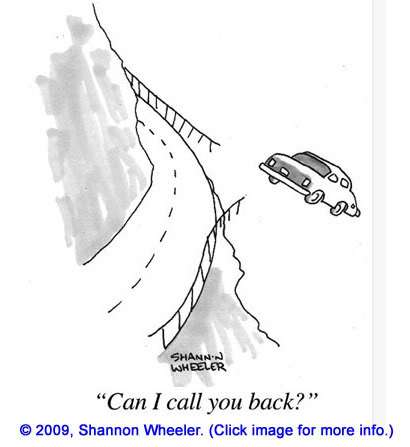
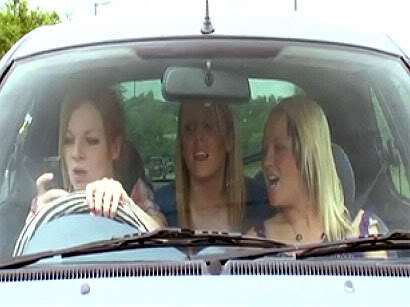
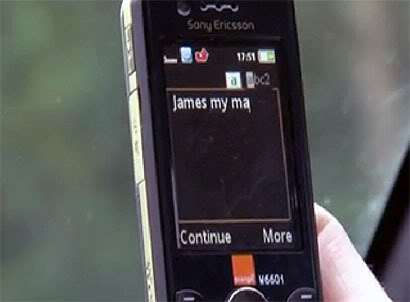
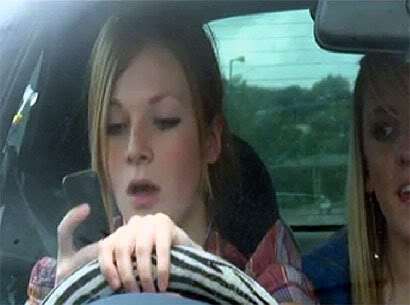
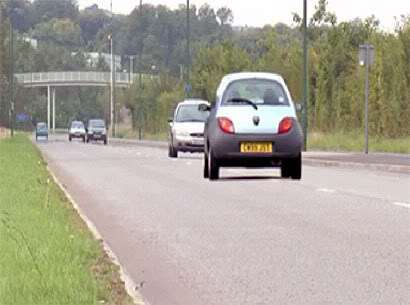
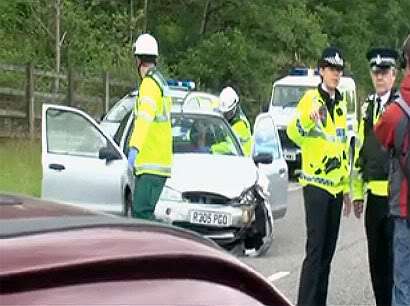
** WARNING – THE ABOVE CARTOON IS DARKLY FUNNY -- (Portland, Oregon-based cartoonist Shannon Wheeler is a fabulous talent who inspires humor and thought-provoking topics for discussion) – BUT THE IMAGES BELOW are screen shots take from a SERIOUS and GRAPHIC public service film from the United Kingdom.

** On July 1, 2008, California's ban against using cell phones while driving went into effect.

** More than one year later, while the law has created a greater awareness about the dangers of using cell phones while driving – the sad truth is it will probably take more accidents – and more tickets – to get more people in line.  (Full disclosure: I haven't invested in hands-free technology, but I don't use my phone while driving.)

** Try this: The next time you're at a red light, count the number of cars going by with drivers using cell phones in broad daylight. I've done this several times and admittedly, it's not scientific, but about 3 cars for every 10 – contain drivers yapping away on their phones. (I've even seen drivers dropping/tilting their heads a little bit to avoid getting caught.)
** Almost 14 months later, the California Highway Patrol (CHP) has issued 112,000 tickets against lawbreakers throughout the state. And when you include tickets issued by city and county police officers, that number balloons to about 250,000 citations. The average fine is about $120, depending upon where you live.

** And most of those tickets were for yapping. It's harder to catch people texting in their cars – which many believe is a greater scourge. Texting while driving is equivalent to an idiot using his thumbs to write a message – while at the wheel of a 2,000-pound killer clocked at 50-miles per hour.


** According to a release issued this month by the U.S. Department of Transportation, several deadly accidents involving texting behind the wheel have raised the possibility of even tougher laws and penalties. In 2008, a commuter train in Los Angeles -- whose driver was texting on a cell phone -- led to accident that killed 25 people and injured 135 others.

** "In another incident, a Florida truck driver admitted to texting moments before a collision with a school bus that killed a student," the release noted. And last month, "a 17-year-old high school student from Peoria, Illinois was killed when she drove off the road while texting with friends."


** And this is just the tip of the iceberg. It's hard to tell which accidents are caused by cell phone use and which aren't – because drivers who survive them won't admit using their phones – and it's hard to prove in the aftermath of cleaning wreckage from a crash.

** In the United Kingdom, a graphic public service film depicting the ravages of using cell phones in cars has spread virally on the Internet. The four-minute sequence involves British actors and creative talent – and is part of a larger 30-minute drama produced and directed by Peter Watkins-Hughes -- an award winning, former BBC TV producer with 15 years experience in documentary, animation, comedy and drama -- with credits in every genre from melodramas to gardening shows.


** Moreover, Mr. Watkins-Hughes is also a lecturer for the Documentary Film and Television department at the Newport School of Art, Media and Design in Wales. He enlisted his own students to work on the film, which was made for - and with - the Gwent Police Department, located about 150 miles west of London. Mr. Watkins-Hughes says the longer-version of this film will be shown at schools this year, to be incorporated within what's called the Personal and Social Education (PSE) curriculum. And he's now in talks with the BBC to have the film, presently entitled "COW" – to be broadcast later this year throughout the U.K.


** WARNING – the graphic, four-minute video clip below is professionally staged -- but appears very realistic and does a fine job hammering its message home. In my view, every parent should see it.  It should be imported and licensed from Mr. Watkins-Hughes for broadcast throughout the United States. His contact information is available by clicking here.


** The clip above is part of a longer drama called "COW." According to its representatives, the film's synopsis is as follows: "It's all about Cassie Cowan, a nice girl from a Gwent valley's family who kills four people on the road because she used her mobile and lost her concentration for a few seconds. Gwent police is proud to have helped Brynmawr filmmaker Peter Watkins-Hughes in the production, which stars local drama students Jenny Davies as Cassie, and Amy Ingram and Laura Quantick as her friends, Emm and Jules." More credit information is available at the bottom of this post below.

** Many years ago I remember getting ticketed for not wearing a seat belt. At the time, the motor cop was almost embarrassed to hit me with a ticket for something other than a gross moving violation. Those days are gone. Today the state's seat belt law is vigorously enforced – and police officers no longer apologize. The combination of seat belts and air bags have dramatically lowered fatalities. You don't even have to look it up. Traffic accidents are still abundant, but lives are being saved. Most "higher-thinking primates" feel buckling up is an automatic reflex. So why then, are people still using their cell phones while driving?

** According to the June 2009 issue of Governing Magazine, what's more astonishing is "while 29 states have passed some kind of limit on cell-phone use...none has gone so far as to enact a total ban on drivers’ phone conversations." This means millions of people are still yapping and texting away, in spite of, the Los Angeles Times reports, a "growing body of studies which show that texting, conversing on hand-held phones or even chatting hands-free...makes us dangerous drivers, as likely to get into an accident as if we were legally drunk."


** The news isn't all bleak. According to Steven Bloch of the Automobile Club of Southern California, cell phone use in cars is down about 60 percent since the law went into effect. But not in New York. "In New York State, where a 'hands-free cell phones law' took effect in 2001, almost no effect of the law was found a year later," said Bloch.

** What's being done?  Beyond the video above that should be licensed and imported for schools in the United States – there's a bill in the U.S. Senate (the ALERT Drivers Act) – which would punish states without laws against texting -- by cutting off millions of federal dollars for transportation. And U.S. Transportation Secretary Ray LaHood has also called for a summit late next month -- to further investigate texting and other driving distractions.

** Mr. Bloch of the Automobile Club reports that since the cell phone ban in California, the 112,000 citations issued by the CHP alone – represents about 6 percent of all moving violation citations. "Hand-held cell phone use appears to have crept up slowly over the months, but contrary to a general perception of much higher usage, it's still far lower than it was before the law took effect a year ago..."

** Well OK, then.  But I still see a lot of people using their cell phones, inviting an accident to happen. Obviously if you catch someone doing this, get as far away from them as possible.

** Or honk like hell.


** UPDATE (10:25 p.m., Pacific Time, Thursday, August 27, 2009): After posting this video Sunday, August 23, 2009 at You Tube -- click here, the bandwidth on my news site exploded. Thousands of viewers seeking the full context of the video's creation -- came over here, blowing past the standard settings on my photo-hosting account, temporarily knocking down many images. This problem has now been permanently resolved.

** I wish to make clear that I was NOT the first person to post this video.
Others have uploaded it. The major difference between the videos is that most (not all) -- do NOT provide sufficient background information about how the film came to be. Many production artists and creative talents in the U.K. who deserve due credit for its creation, have rightly expressed irritation about "losing control" of their film to the Internet. I wish to correct some of that now.

** This 30-minute drama is available in additional snippets which have been largely ignored -- (compared to the video of the crash itself)-- but can be seen by visiting the work posted by film editor Richard Jon Micklewright, who worked on this production with producer-director Peter Watkins-Hughes -- and goes by the handle, "richardjonm" at You Tube. I encourage you to visit his video channel, where you will find the crash video clip, production credits and his contact information. (Parenthetically, it also also features my own verbatim introductory words and phrasing with my permission, presented in my standard news summary format).

** You will also find a series of "tasters" (which are equivalent to the word "teasers" in the United States) -- from the drama that surrounds the four-minute crash video clip. My only role was to frame the video's titanic importance for the very news column you're reading -- in order to point out the woeful lack of comprehensive bans against the use of cell phones in cars in many states here in the U.S. My intent is to call attention to a problem that, when corrected, will serve the greater good.

(Original material © 2009 by David Kusumoto.)